Last month, I went on my first-ever trip to Cuba 🇨🇺 with a small tour group of cigar enthusiasts, organised by Surrey Cigars.
I still can’t quite believe it happened! Visiting this country has been a dream of mine ever since I developed a passion for cigars—definitely bucket list stuff.

This is Part 3 of my cigar adventure, where I’ll share my experience visiting one of Cuba’s most iconic tobacco farms: the Alejandro Robaina Tobacco Plantation, located in the famed Pinar del Río region—heartland of Cuban cigar tobacco.

Missed earlier posts? Catch up here:
Part 1 – Before the trip
Part 2 – Getting there and first impressions
From Havana to Pinar Del Rio
On our first full day in Cuba, we set out early from Havana to explore the legendary tobacco fields of Pinar del Río—widely regarded as the premier region for cultivating Cuban tobacco.
We grabbed a quick breakfast at the hotel buffet and jumped on our bus…

Credit: George
… cigars in hand and drinks flowing, ready for the adventure ahead.
The drive took about two and a half hours. We passed through the quiet town of Pinar del Río, with its low-rise pastel buildings and laid-back vibe, before the landscape opened up into endless green fields. Traditional farmhouses, drying barns, and rows of crops stretched as far as the eye could see—this was tobacco country.
Who was Alejandro Robaina?
Alejandro Robaina (1919–2010) was a legendary figure in Cuban tobacco. His family had been growing tobacco since 1845, and unlike many farms absorbed into cooperatives after the Cuban Revolution, his remained independent. He believed that family-run farms produced the best tobacco—and it showed.

Source: The Independent
Robaina’s leaves were used in top-tier Cuban cigars like Cohiba and Hoyo de Monterrey, earning him the nickname The Godfather of Cuban Tobacco. In 1997, the Cuban government launched the Vegas Robaina brand in his honour—he remains the only grower with a Cuban cigar named after him.

I had my first Vegas Robaina cigar a couple of years ago at CGars Ltd and was so impressed—it’s still one of the lesser-known gems in the Cuban lineup.


Arriving at the Robaina Plantation

As soon as we stepped off the bus, the calm atmosphere of the farm struck me. There was a peaceful energy in the air, as workers passed by with quiet focus.

We gathered in the outdoor seating area, where a wooden statue of Alejandro Robaina sat in a rocking chair—a lovely tribute that made it feel like he was still there among us.

Our guide welcomed us and took us straight to the curing barns to walk us through the cigar-making process.


The walls were covered with photographs showing every stage—from seed to cigar.

The seeds of greatness
One of the coolest things we learned was about the tobacco seeds themselves—tiny, no bigger than grains of sand. These seeds are harvested from flowers that only bloom if the plant is allowed to fully mature, which usually isn’t the case during regular growing cycles.

I was fascinated to learn that the same Cuban tobacco seed is planted in three different areas of the farm, each area chosen specifically for wrapper, binder, or filler leaves.

It all depends on how much sunlight the plants receive: more sun results in thicker, stronger filler leaves; more shade produces smoother, silkier wrapper leaves.

In the fields
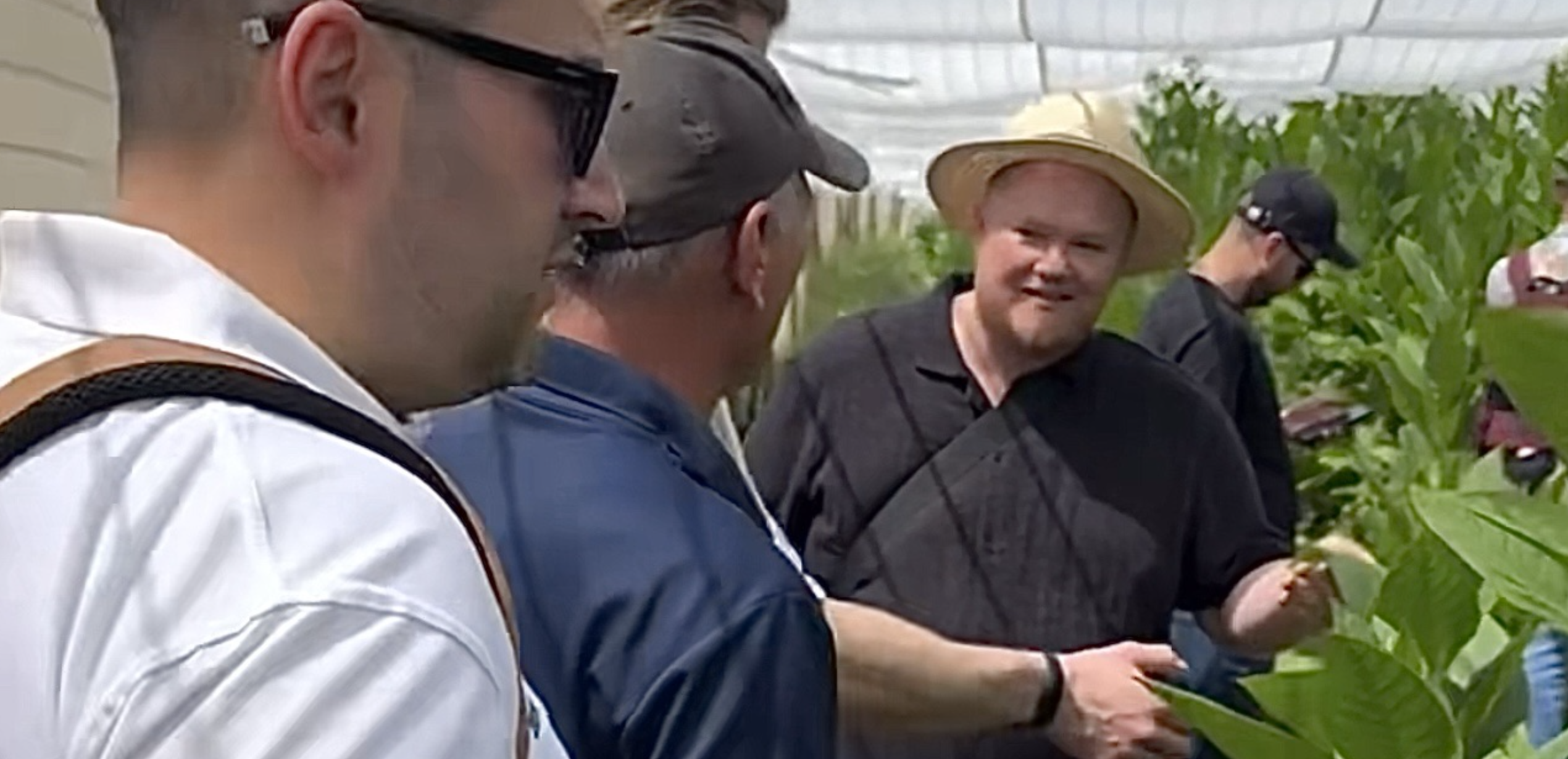
We headed into the fields, where wrapper leaves were growing under thin white canopies of cheesecloth.

These shaded conditions help produce the delicate leaves that give cigars their flawless outer finish.

One fun fact: while this is the Robaina family plantation, their tobacco isn’t just used in their own cigars. In Cuba’s nationalised system, tobacco is centrally distributed, and blending decisions are made at the factories. That means their high-quality leaves might end up in Cohiba, Montecristo, or Vegas Robaina, depending on the batch.
Inside the Curing Barns
Next, we walked through the curing barns where harvested leaves are hung to dry. The smell was rich and earthy—pure, natural tobacco.

The curing process lasts 45 to 60 days depending on weather.

After that, fermentation begins. This can take anywhere from 30 days to a full year.

It is essential for removing ammonia and developing complex flavour.

It’s worth noting that this farm was severely impacted by Hurricane Ian in 2022. The storm destroyed several barns and disrupted infrastructure.

Source: Halfwheel

Source: Halfwheel
Thankfully, it struck before the planting season, sparing the crops—but rebuilding took time and dedication. You’d never know now, looking at the lush, healthy fields.
Cigar roller
One of the highlights of the visit was watching a master torcedor at work—a gentleman in his 90s who had been rolling cigars for decades. Every movement was smooth and precise. I was mesmerised.
Each roller typically makes between 100 and 150 cigars per day – but that usually happens at the cigar factories – I think it was shown here to give us an example of how things are done. After rolling, the cigars rest in wooden molds to hold their shape before receiving their final wrapper.

Watching him work gave me a newfound appreciation for the craftsmanship behind every single cigar.
Lunch and cigars with Hirochi Robaina
After the tour, we sat down for a traditional Cuban lunch at the farm.


We were later joined by none other than Hirochi Robaina, Alejandro’s grandson.
Hirochi shared stories about his grandfather’s legacy and his own journey in the industry. His passion was infectious, and chatting with him felt like a real privilege.
He’s taken the family tradition global by launching his HR cigar brand, using Nicaraguan tobacco. Because Cuban tobacco is state-controlled and can’t be sold in the U.S., Hirochi teamed up with American producers to honour his heritage in a new way.

After lunch, we were treated to a custom-rolled cigar exclusive to the farm—an absolute beast called The Godfather, named in tribute to Alejandro Robaina. We sat back, lit up, and let the afternoon pass us by in perfect Cuban style.

Before heading back to Havana, we had a chance to buy cigars directly from the farm. Only about 10% of the tobacco grown here stays on site for direct sales, and these cigars were exceptional—better than many we found in Havana. Prices ranged from €5 to €15. Looking back, I wish I’d bought more.

This visit was unforgettable. Seeing the time, effort, and artistry that goes into every cigar—from planting the seed to lighting the final product—has completely changed how I look at cigars.
It reminded me why proper storage and care is so important: these cigars are crafted with so much intention, it’s only right that we honour them with the same respect.

As we wrapped up, we took some photos with Hirochi, said our goodbyes, and hopped back on the bus to Havana, reflecting on what had been an absolutely incredible day.
Next Up: Visiting the Hector Luis Prieto Tobacco Plantation!
I will share more about our next stop in Pinar del Río in the next post. Then, I’ll talk about visits to cigar factories, cigar shops, and the rest of our unforgettable journey across Cuba. Stay tuned! 🇨🇺
Leave a Reply