Walk into almost any specialist cigar retailer in the UK today and you’ll find a humidor stocked with cigars from Nicaragua, the Dominican Republic and Honduras sitting comfortably alongside Cuba’s most famous brands.
For today’s cigar smoker, that choice feels entirely normal. It wasn’t always that way!
Three decades ago, Cuban cigars dominated the UK market. Any retailer offering alternatives often found them dismissed simply as “non-Cuban” — a label that defined these cigars by what they lacked, rather than recognising what they had to offer.
Few people have done more to change that perception than Jerry Mir.

Most cigar enthusiasts won’t recognise his name, but retailers across the UK, especially in London, almost certainly will. For nearly three decades with TOR Imports, Jerry has travelled the country introducing premium cigar manufacturers to specialist retailers, helping merchants build confidence in unfamiliar brands and, in the process, playing an important role in the growth of New World cigars throughout the UK.
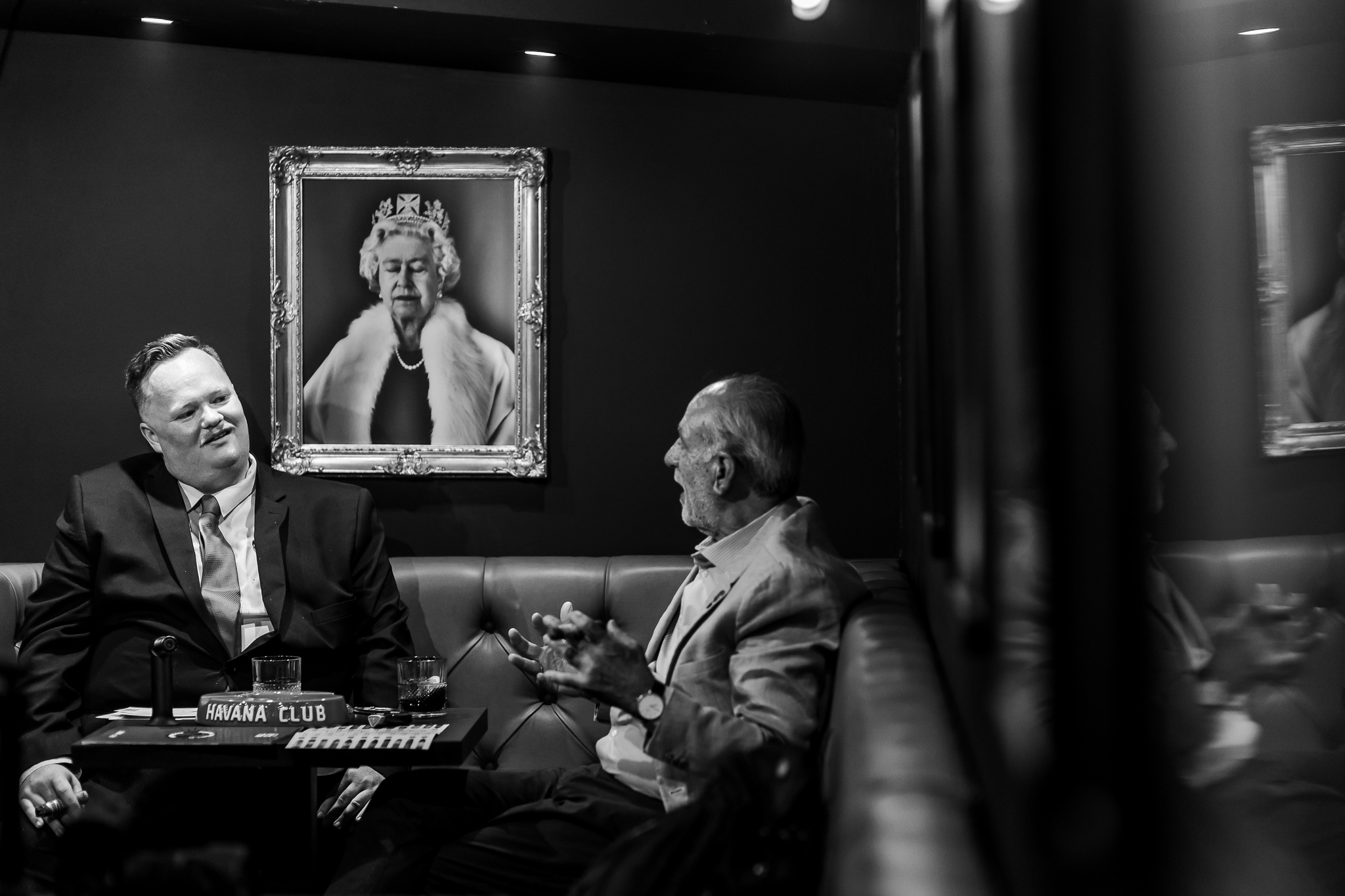
As Jerry prepares to retire, I had the privilege of sitting down with him in the cigar sampling lounge at Shenfield Wines in Essex to reflect on a career that has quietly influenced UK’s premium cigar landscape. Naturally, the conversation began with lighting a cigar.
Jerry chose a My Father Blue, while I enjoyed a Perdomo 30th Anniversary cigar. Before long, the room was filled with smoke (though not for long, thanks to the excellent ventilation system at Shenfield Wines) and stories stretching back nearly fifty years in the tobacco trade.


Learning the trade
Long before premium cigars became Jerry’s profession, tobacco was already part of his working life.
Fresh out of college, he found a job with a tobacconist, Joe Wallace who operated a kiosk at Bank Underground Station in the City of London. It was a very different industry to the one we know today.
“The business was mainly cigarettes and machine-made cigars,” Jerry recalls. “Every Friday we’d do a stocktake. Looking back nearly fifty years, the kiosk was taking around £15,000 a week.”
It was a fast-moving retail environment where efficiency mattered. Those early years taught him how shops operated, how customers bought tobacco products and, perhaps most importantly, how relationships kept people coming back.

From there he joined Rothmans, spending more than a decade in cigarette sales before moving to Altadis, where he began working with handmade cigars as well as established European tobacco brands.
At that point, cigars were something he enjoyed rather than fully understood.
“I smoked cigars,” he says. “But I didn’t really know anything about them.”
That would soon change.
A chance meeting in Harrods
By the late 1990s, changes within the tobacco industry left Jerry wondering what came next. One afternoon, while leaving Harrods, he bumped into Mark Acton — an encounter that would prove pivotal.

Mark, who had recently founded TOR Imports with his wife Sandra, invited Jerry upstairs for coffee. Over coffee — and, inevitably, a cigar — the conversation turned to the future.
“My company was pulling out of the UK market,” Jerry remembers. “Mark asked me what I was going to do.”
Jerry admitted he wasn’t sure.
Then came the unexpected question: “Would you consider coming to work with us?”
Jerry hesitated. “I told him, ‘I don’t really know much about premium cigars. I smoke them, but I don’t know enough about the industry.’”
Mark wasn’t concerned. A few weeks later, Jerry travelled to meet Mark and Sandra. They talked over dinner, discussed the business and, before long, Jerry accepted the offer.
He joined TOR Imports in 1998.
Looking back, it was perfect timing. Neither of them realised they were standing at the beginning of one of the biggest shifts the UK cigar market would experience.
A market dominated by Cuba
When Jerry arrived at TOR Imports, Cuban cigars occupied centre stage in almost every specialist humidor. The company carried respected premium brands, but New World cigars represented only a tiny proportion of the market.

Retailers often referred to everything else as “non-Cuban” — a description Jerry never liked.
“‘Non-Cuban’ immediately sounds like second best,” he says. Nobody wants to be known as ‘non’ anything.
Around the same time, consumers were becoming increasingly familiar with the idea of New World wines from Australia, Chile and South Africa.
TOR Imports began adopting similar language when referring to premium cigars from Nicaragua, the Dominican Republic and Honduras.
Scott Vines, who later took over as managing director of TOR from Mark Acton, helped further establish and trademark the term “New World Cigars” in relation to these premium cigar-producing regions.

It was a subtle change in vocabulary, but an important one. Rather than defining cigars by what they lacked, the phrase celebrated where they came from.
Changing the language, however, was the easy part.
Changing minds would take years.
Building confidence, not just sales
Jerry is quick to point out that success was never about convincing retailers to abandon Cuban cigars. Quite the opposite.
“Cuba will always be Cuba,” he says. “People recognise Montecristo, Romeo y Julieta and Cohiba. Those names are part of cigar history.”
Instead, the challenge was helping retailers understand that premium cigars from Nicaragua and the Dominican Republic deserved a place alongside them.
That required patience — and a completely different approach to sales.

“When I first started,” Jerry says, “salespeople travelled with order books. You checked the shelves, filled the gaps and moved on.”
He pauses before smiling.
“That isn’t the job anymore.”
Over the years, Jerry stopped thinking of himself as a salesman and became more of a consultant.
Before recommending a single cigar, he wanted to understand a retailer’s business: what sold well, who their customers were, which price points worked and what styles of cigars people were asking for.
Only then would he suggest new products.

His advice often surprised people. Rather than encouraging retailers to buy heavily, he urged caution.
“I’d rather you bought one or two boxes and sold them than filled your humidor with stock that doesn’t move,” he explains.
His reasoning was simple: a retailer’s money sitting on the shelf helped nobody.
“I’m not here for a sprint,” he says. “I’m here for the marathon.”
That philosophy became one of the defining characteristics of Jerry’s career. For him, relationships always mattered more than transactions.
Trust came before turnover.
Sales followed naturally.
Changing minds

Winning over UK retailers was never going to happen with a catalogue and a sales pitch.
By the late 1990s, Cuban cigars had decades of heritage behind them. Their names were instantly recognisable, even to people who had never smoked a cigar. A customer buying a gift might know little about tobacco, but they knew Montecristo, Romeo y Julieta or Partagás.
New World cigars had no such advantage.
Many UK retailers had never visited Nicaragua or the Dominican Republic. They knew little about the families behind the cigars, the tobacco being grown or the techniques being used.
Asking a retailer to invest hundreds of pounds in an unfamiliar brand required more than enthusiasm — it required confidence.

Jerry realised that confidence couldn’t be built from behind a desk.
“You can tell people stories,” he says. “But until they’ve seen it for themselves, it’s difficult.”
So TOR Imports took a different approach.

Rather than simply importing cigars, they began introducing retailers to the people who made them.
From the farm to the humidor
One of the company’s most successful ideas was taking groups of UK retailers to Nicaragua, and launching the educational TOR Tours in 2016.
For many, it was their first visit. Some had travelled to Cuba before, but Nicaragua offered something different.
Instead of seeing only a factory floor, visitors experienced the entire journey. They walked through tobacco fields during harvest. They watched leaves curing inside vast barns. They stood among warehouses filled with ageing tobacco before seeing bunchers, rollers and quality-control teams transform those leaves into finished cigars.
By the end of the trip, retailers understood something they couldn’t appreciate from a brochure. Premium cigars weren’t simply manufactured. They were cultivated.

“You see everything,” Jerry explains. “From the seed right through to the box.”
That experience changed conversations back in the UK.
Retailers returned not only with product knowledge but with stories — stories about the families behind the brands, the generations of experience and the extraordinary amount of time invested before a single cigar ever reached a humidor.
Consumers responded to those stories.
The family behind the cigar
Spend enough time talking to Jerry and one theme appears again and again. Family.

While individual blends and ratings matter, he believes the greatest cigar manufacturers have something else in common: they control every stage of production.
From growing tobacco to ageing leaves, making boxes and overseeing quality, the best producers leave as little to chance as possible.
It is one of the reasons he speaks so highly of Padron.
For Jerry, Padron represents more than a successful cigar company.
It represents resilience.
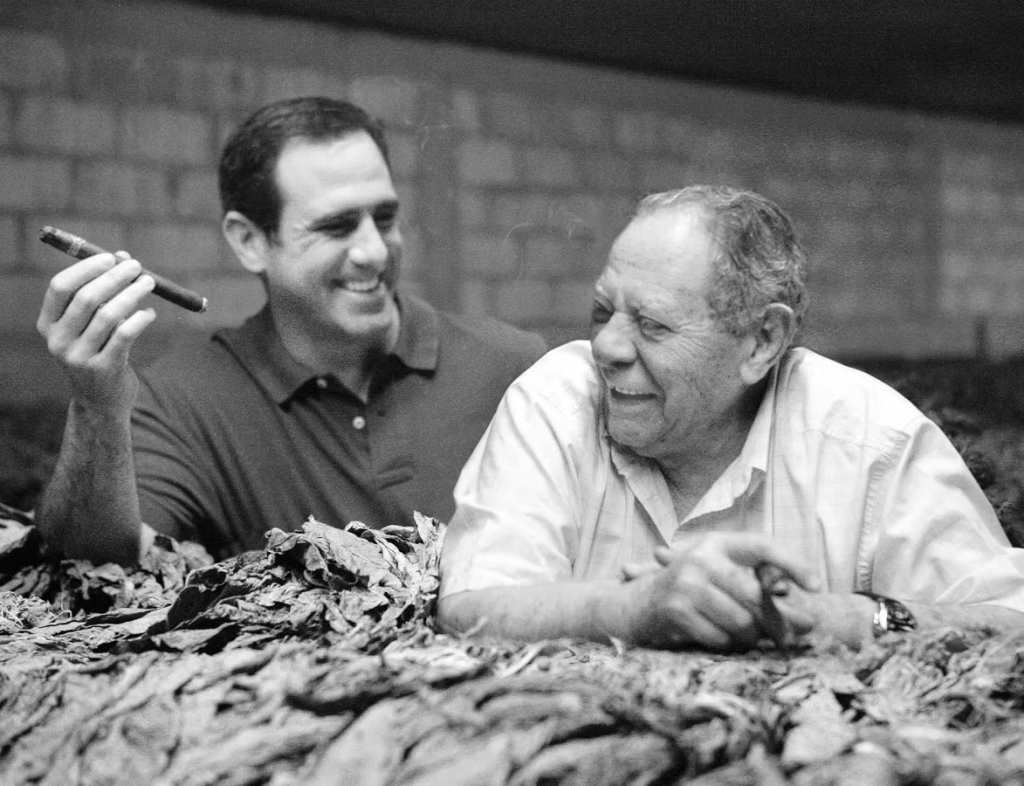
He tells the story of the Padron family arriving in the United States after leaving Cuba with very little.
José Orlando Padrón worked wherever he could before eventually saving enough money to begin making cigars. Over time, the family established themselves in Nicaragua, survived political upheaval, rebuilt after the revolution and created one of the world’s most respected premium cigar brands.
Whether every detail has grown through years of retelling almost doesn’t matter.
The lesson certainly has.
For Jerry, great cigars begin with patience.
“They’re not trying to make millions more cigars every year,” he says. “They’re trying to make the best cigars they can.”
That philosophy resonated with UK retailers looking for quality rather than quantity.
Education instead of selling
Jerry is adamant that manufacturer visits were never about hard selling.
In fact, he often began by lowering expectations.
Cigar companies, he explains, naturally compared the UK with the US.
The comparison rarely helped.
“The UK is a very different market,” Jerry says.
“We don’t have the same number of cigar sampling lounges. We don’t have the same number of specialist retailers. And because of duty, the same cigar can cost three or four times as much here.”
That meant manufacturers had to think differently.

Rather than arriving with elaborate merchandising plans, Jerry encouraged them to observe first and listen second.
Retail space in the UK is expensive. Most specialist retailers simply don’t have room to display dozens of open boxes in the way many US cigar stores can.
Instead, Jerry encouraged visiting manufacturers to ask questions. What were UK cigar smokers enjoying? Which sizes sold best? How much were customers willing to spend? Only by understanding the market could they hope to succeed within it. “The visit wasn’t about selling cigars,” Jerry says. “It was about learning.”
Building a community
As retailers became more confident stocking New World cigars, the next challenge became introducing those cigars to consumers. Again, Jerry resisted the obvious approach.
Strict rules around advertising meant it could only achieve so much. A recommendation behind a counter helped. But nothing persuaded someone to spend £30 on an unfamiliar cigar quite like sampling it.
So Tor Imports began organising tasting events.

By today’s standards the first gatherings were modest. Sometimes only five or six people turned up. That didn’t matter. Jerry believed every event helped build something larger.
People met other cigar smokers. Friendships formed. Retailers gained loyal customers. Manufacturers developed a direct connection with consumers. Over time those evenings evolved into thriving local cigar communities across the UK.
“You’ve got one thing in common,” Jerry says. “The cigar.”
Everything else followed naturally.
Bringing the makers to the UK
As relationships with manufacturers deepened, another idea emerged.
If not every retailer could travel to Nicaragua or the Dominican Republic, perhaps the manufacturers could come to the UK.
Inviting them wasn’t always easy. Most spent much of the year travelling between the United States, Europe and Latin America. The UK market is comparatively small.
But it was important.

Gradually, more factory owners, blenders and brand representatives began making the journey.
For consumers, these weren’t marketing exercises. They were opportunities to sit down with the people who had blended the cigar in their hand.
Questions became conversations. Conversations became friendships.
That same philosophy eventually helped inspire larger educational events, including Meet the Makers, bringing producers and enthusiasts together in a way that would have seemed unimaginable when Jerry first entered the industry.

Looking back, it’s easy to assume the rise of New World cigars was inevitable. Jerry knows otherwise.
It happened because manufacturers invested in relationships. Retailers invested in education. Consumers invested their curiosity.
And somewhere between all three, the UK’s cigar culture quietly began to change.
More than a sales representative
Ask Jerry what made him successful and he’ll tell you it wasn’t product knowledge. It wasn’t sales targets. And it certainly wasn’t convincing people to buy cigars they didn’t want.
“It all comes down to two things,” he says. “Trust and communication.”
It’s a philosophy he developed over decades on the road. When he first entered sales, the job was straightforward: visit a shop, check the shelves, write an order and move on.

Premium cigars demanded something different. A humidor isn’t simply another shelf. Every box represents an investment. If it doesn’t sell, that money sits tied up in stock instead of being reinvested elsewhere.
Jerry understood that better than most. His job wasn’t to fill humidors. It was to help retailers build businesses that would still be thriving years later.
“I’ve never believed in selling something just because I can,” he says. “I’d rather understand your business first.”
That approach earned him something far more valuable than an order.
It earned trust.
Scott Vines on Jerry’s legacy
For Scott Vines, the Managing Director of TOR, that trust is what defines Jerry’s contribution — not just to TOR, but to the wider UK cigar industry.

“The manufacturers and the retailers are the rock stars of the cigar industry, but without the army of foot soldiers across the distribution network, top brands would not be available in such a wide selection of stores across the UK,” Scott says.
“Jerry is one of those unsung foot soldiers. It is no exaggeration to say that he built the foundation that TOR stands on in London today and is a massive part of our history.”
Scott believes Jerry’s biggest qualities have always been personal ones.
“His loyalty and friendship — to me personally and to all of Team TOR over his career — is what stands out the most.”
“Jerry has deep kindness. He shows care and support to his colleagues and his customers. He is also very frank, so everyone knows where they stand with him. I am sure many consider him not just a colleague, but a friend.”
Helping retailers grow
Over the years, Jerry watched the UK’s specialist cigar trade evolve. Some retailers had been established for generations. Others were opening their doors for the very first time. Each required something different.

With established businesses, the conversations centred around expanding premium selections, understanding customer preferences and introducing new brands without disrupting what already worked. For new retailers, the advice often had very little to do with cigars. Instead, Jerry found himself discussing cash flow, customer behaviour, retail space and long-term planning.
“I’d ask them what they wanted their business to become.”
The answer usually revealed everything. Some wanted the largest humidor. Others wanted the biggest range. Jerry’s advice rarely changed.
“Build slowly.”
The temptation to buy every exciting cigar available was understandable. But he believed successful retailers weren’t built on impressive opening days. They were built on consistency.
The reality check
One story from Jerry’s career perfectly captures his approach.
A couple approached him with plans to open a cigar shop in the South of England. They were passionate. They loved cigars. They had spent months refining their ideas and couldn’t wait to tell him about them. Jerry listened for nearly an hour.
When they finished, they expected encouragement. Instead, he asked a simple question.
“Have you got around £150,000 to invest?”

They hadn’t.
Then came another.
“Were you planning to leave your jobs?”
Again, the answer was no.
Jerry gently explained that passion alone wouldn’t pay rent, employ staff or keep shelves stocked. He wasn’t trying to discourage them. Quite the opposite. He wanted them to succeed.
“I’ve seen too many people lose money because they underestimated what it takes.”
He encouraged them to research why no specialist cigar shop had succeeded in their area before committing their savings.
It wasn’t the answer they expected. Years later, Jerry still believes it was the right one.
Sometimes the best advice isn’t telling someone to chase a dream. It’s helping them avoid an expensive mistake.
Communities, not customers
While cigars brought people together, Jerry believes community is what kept them together.
Long before social media made cigar groups commonplace, local retailers were organising informal evenings in pubs, restaurants and private venues.
Some events attracted only a handful of smokers. Others gradually grew into thriving monthly gatherings.

Jerry remembers encouraging retailers not to judge success by attendance alone.
“Five people today might become twenty next year.”
That prediction proved remarkably accurate.
Across the UK, cigar nights slowly became established fixtures.
Regular faces introduced friends. Conversations became friendships.
Business owners found themselves hosting communities rather than simply serving customers.

Jerry watched retailers such as Nish Patel at Shenfield Wines invest years into creating spaces where people could do more than buy cigars — they could enjoy them.
Likewise, enthusiasts such as James Bird of Cigar Nights built successful communities through regular cigar evenings long before opening dedicated retail spaces.
Neither happened overnight. Both were built patiently, one event at a time.
“There’s no fast track,” Jerry says.
“You’ve got to build it.”
The pandemic years
Nothing tested those communities more than the Covid pandemic.
Retailers closed their doors. Events stopped overnight. Factory visits became impossible.
For a business built around face-to-face conversations, it could easily have brought everything to a standstill.
Instead, people adapted.

Retailers embraced virtual tastings. Manufacturers joined online conversations from Nicaragua and the Dominican Republic.
Consumers who had never spoken directly to a blender suddenly found themselves asking questions over video calls from their own living rooms.
It wasn’t the same. But it kept people connected.
Perhaps more importantly, it accelerated changes that were already beginning.
Retailers started collecting customer email addresses. WhatsApp groups replaced printed invitations.
Events returned stronger than before because communities had stayed together.
For Jerry, it reinforced something he had always believed.
People don’t simply buy cigars.
They buy into relationships.
A changing industry
Over nearly five decades in tobacco, Jerry has watched almost every aspect of the business evolve.
Taxes increased. Display restrictions arrived. Smoking legislation reshaped public spaces. Supply shortages challenged retailers. The rise of vaping transformed the wider tobacco market.
Premium cigars, however, followed a different path.
“When I started, cigars were almost a status symbol,” Jerry reflects.
“They were something associated with businessmen or special occasions.”

Today, he sees something different.
A younger audience. More women attending cigar events. Communities built around enjoyment rather than image.
For him, that’s one of the industry’s greatest achievements.
The culture has become more welcoming. More inclusive. Less intimidating.
People arrive curious rather than self-conscious. They ask questions. They learn. And they stay.
Jerry believes that openness will shape the industry’s future far more than any particular brand or blend.
“The cigar gets people through the door,” he says.
“The people are what make them come back.”
Preparing the next generation
As retirement approaches, Jerry’s focus has gradually shifted away from building accounts and more towards developing people.
He speaks warmly about younger colleagues who have joined Tor Imports in recent years, praising both their knowledge and enthusiasm. “They’ll take the company further than I ever could,” he says. It’s not false modesty.

Throughout our conversation, Jerry repeatedly returns to the idea that no one person is bigger than the business. Relationships matter.
But institutions only survive when knowledge is shared rather than protected.
That willingness to pass the baton perhaps says more about Jerry than any sales figure ever could. For him, success was never about being indispensable.
It was about leaving the industry stronger than he found it.
The cigar is just the beginning
Before we finished, I had to ask Jerry the question every cigar enthusiast wants to know.
“What’s your favourite cigar?”
He smiles (and swears) before answering.
“I’ve got favourites,” he says. “But my favourite cigar is the one I’m smoking today. Tomorrow it’ll probably be another one.”
It’s a wonderfully Jerry answer.
And that’s a wrap…

Over nearly three decades with TOR Imports, Jerry Mir has helped introduce countless cigar smokers to premium cigars from Nicaragua, the Dominican Republic and Honduras, but he’s never been interested in declaring one brand the winner. For him, cigars have always been about people, stories and shared experiences rather than labels or prestige.
As we got to the final third of our cigars and the conversation came to an end, it struck me that Jerry’s greatest contribution to the UK cigar industry wasn’t simply helping retailers sell New World cigars. It was helping them believe in them.
Thousands of cigar smokers now enjoy a wider choice because of relationships he quietly built over nearly thirty years — one conversation, one shop and one cigar at a time.
It’s exactly the sort of legacy Jerry himself would probably never claim.
But it’s one he has unquestionably earned.

Special thanks to Nish of Shenfield Wines for generously hosting our conversation, and to Sailesh for his exceptional work behind the camera, including the photography, lighting, and filming. Above all, our heartfelt thanks go to Jerry for taking the time to share the fascinating story of his remarkable career.
Interested in visiting Shenfield Wines?
Shenfield Wines (aka Essex Cigar Co)
86 Hutton Road
Essex
CM15 8NB
Telephone: 01277 204899
Social media: Instagram
Website: shenfieldwine.co.uk
Want to hear more? The full video interview is available on my YouTube channel now:
Leave a Reply